About me
The book I would have wanted to find, as a reader.
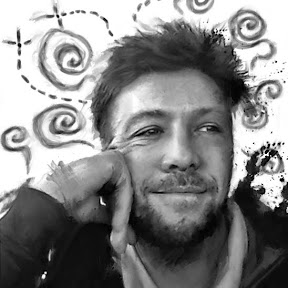 I am a multidisciplinary artist
specialized in graphic, plastic, and digital arts.
And driven by an inextinguishable curiosity that will always remain my guiding thread.
I am a multidisciplinary artist
specialized in graphic, plastic, and digital arts.
And driven by an inextinguishable curiosity that will always remain my guiding thread.
My name is Yohan Dupuy. I am a french multidisciplinary artist working mainly in the graphic, plastic, and digital arts. And driven by an inextinguishable curiosity that will always remain my through line.
Mine is the path of a self-taught creator, after a spell at art school. 3D graphics, development, interface design, fine art, painting, illustration, video. Eighteen years freelancing as a web designer and digital illustrator, four years in motion design and editing, and 3D work today.
At every stage, I was not collecting skills for their own sake. I followed what I wanted to make. There is still so much to explore.
Writing
I have always written for myself. Notebooks, thoughts, poems. I like playing with words the way I play with images, turning them over, setting them against each other, working their substance.
And I have been running tabletop roleplaying games for thirty years. I have written a great many scenarios, most of them for Call of Cthulhu. It was only natural that I would end up wanting to bring one of them to life.
Boston, 1926
The twenties and Massachusetts are a nod to H.P. Lovecraft, there are others in the story, subtly slipped. Singular things happen there, in fiction. The period itself fascinates me. Technology was in its infancy, and its limits made isolation far more tangible. The underworld and Prohibition complete that setting, and I allude to them here and there.
Jewish culture came into it another way. For a long time I had wanted to build a scenario out of the urban legend of the Dybbuk Box. Doing the research, I found a great deal more than what I had come looking for.
Seven years, two stops
Rather more than seven, in truth, but I stopped counting.
I am not a professional writer. The writing took time and constant exactingness, mostly in my spare hours, out of passion. Condensed into working days, Maximilien amounts to roughly two full-time years.
I stopped twice, the second time for four years. I had not measured the scale of my own ambition. The further I went, the more I enriched and complicated, until I lost my way, saturated, gave up. Each time I came back with a fresh eye, encouraged by distance and by the quality of what I had already made. Each time I told myself it was worth going on.
Then 2026 arrived, exactly a century after the events of the story. I took it as the signal that it was time to finish.
What I believe
I believe deeply that interactivity can enrich literature without cheapening it. Used with restraint, it gives the reader a space where their own gaze becomes part of the story. That is why I wanted a work where technology would never be a demonstration, but a quiet presence in the service of feeling.
My stories rarely have heroes. They are about human beings facing their flaws, their contradictions, their fears, their choices. The fantastical and horrific elements running through Maximilien are the language of an inward exploration. What interests me is not the monster waiting in the dark, but the one that sometimes grows at the heart of our certainties.
I also believe that creation demands sincerity. I try to write without cynicism, without emotional manipulation, without handing out ready-made answers. I would rather ask questions. Leave room for doubt. Invite each reader to build their own reading.
If Maximilien had to be summed up in one sentence, I would say it is the book I would have wanted to find as a reader. A work that trusts the intelligence of its audience.
How the images and animations are made
My Steam page declares the use of artificial intelligence tools. That is accurate, and this page is where I can say what the declaration covers.
Every piece begins as a drawing, or a composite, made on a graphics tablet. It then goes through generative passes on models I run locally, and comes back to the tablet, where I rework it by hand until it is what I wanted.
Generation is one stage of the process. It is not the process. I have been a digital illustrator for twenty years, and what decides whether an image stays is the same thing it has always been.
What interests me in these tools is not replacing creation, but widening the range of what can be attempted. Technology only has value, to my mind, as long as it remains deeply human.
The people who worked on it
Gaëtan Larant and Nicolas Thonney are long-standing friends, artists of many trades like me, whose work I admire. Their eye pulled me out of my own patterns and reflexes, which gives Maximilien a density I would not have reached alone, varied and at times contrasting. I gave them a free hand within a few constraints, and it was in that freedom that they brought me their most surprising proposals.
Lucia Desogus wrote the English translation. I chose her on a sample delivered quickly and already right, and because her feeling for writing moved me. A reader of American fiction, she understood at once what I was looking for, someone able to hear the subtlety of the images and metaphors, and to carry them across fluently.
I hope Maximilien gives you as much pleasure and as much resistance as it demanded of me.
Yohan Dupuy, August 2026.