Murder Mystery Horror Games to Play This Halloween
Murder Mystery Horror Games to Play This Halloween Halloween horror doesn’t always chase you down a corridor. Sometimes it hands...
Read More →
Published May 15, 2026 — Updated May 15, 2026 · 15-minute read
There's a specific itch only one kind of game scratches — the itch for cosmic horror that looks as old as the dread it summons. Hyper-realism kills Lovecraft. A photorealistic Cthulhu is just a big monster. A 1-bit Cthulhu glimpsed between flickering Macintosh windows is something your brain has to finish drawing for itself, and that's the whole point. Below you'll find twelve lovecraftian retro style games where pixel art, ASCII, hand-drawn parchment, or 1990s point-and-click aesthetics carry the weight the prose used to carry. They span 1998 to 2025, run on almost any laptop, and most of them cost less than a cocktail.
One of them is launching October 26, 2026: Maximilien, a French psychological horror interactive novel set in 1920s Boston. Since this list values writing-as-mechanic and an old-world aesthetic, it earned a place in the back half on merit — though full disclosure, this site happens to be its home.
Quick answer: The best lovecraftian retro style games in 2026 use deliberately dated visuals — 1-bit, ASCII, pixel-RPG, point-and-click — to evoke cosmic horror through suggestion rather than spectacle. Top picks include World of Horror, Stygian: Reign of the Old Ones, Darkest Dungeon, Lone Survivor, and Anchorhead. For tabletop crossover, the Call of Cthulhu: Solo Investigator's Handbook deserves its own seat.
Lovecraft argued in his 1927 essay Supernatural Horror in Literature that the strongest fear is fear of the unknown, and that any specific description weakens that fear. A 4K-rendered Shoggoth, no matter how lovingly animated, is something you can see. What you can see, you can defeat — or at least file. Retro aesthetics work because they refuse to finish the image. Pixels suggest. ASCII implies. Black-and-white text dares you to picture what isn't drawn.
Three reasons the retro mode keeps producing the genre's best entries:
You'll see all three at work below. Let's start with the title that taught the current decade what 1-bit horror could do.
Paweł Koźmiński (working as Panstasz) built World of Horror mostly in Microsoft Paint, alone, while practicing dentistry in Poland. He started releasing demos on itch.io in 2016. Steam Early Access landed in February 2020. The 1.0 release shipped in October 2023 through Ysbryd Games, with a Switch and PlayStation launch a week later. The wait was worth it.
Set in the fictional Japanese seaside town of Shiokawa in "198X", the game is a roguelite RPG built around five randomized mysteries you must solve before a doom meter reaches 100%. Combat is turn-based, sanity is fragile, and the entire visual presentation — created in 1-bit monochrome to evoke early Macintosh interfaces and Junji Ito's manga — is one of the most stylistically committed art directions in indie horror. Cassandra Khaw, of Sunless Skies, contributed additional writing.
Among the most awarded indies of 2023 (IndieCade Visual Design, RPG Site Best Art) and the clearest answer to anyone who thinks "retro" means "lazy". Around $19.99, runs on a toaster, gives back a hundred hours easily.
Perfect for: Junji Ito readers, fans of doomed-by-design roguelites, anyone who finds Microsoft Paint more interesting than Unreal Engine.
Cultic Games' 2019 isometric RPG drops you into Arkham, Massachusetts, after the Cataclysm — an event implied to be Cthulhu's actual rising. The town has been pulled into the Dreamlands. Your character picks an Archetype (Aristocrat, Veteran, Investigator, and so on) and a Belief System (Materialist, Rationalist, Esoteric…) that changes how you lose your mind, and the game tracks two sanity systems: temporary losses and permanent damage that opens new dialogue and closes others.
The art style is the secret weapon. Stygian leans hard on 1920s pulp magazine illustration — heavy ink lines, sepia tones, hand-drawn portraits straight out of Weird Tales. Combat is the weakest part; everyone agrees on that. The writing, atmosphere, and faithfulness to the Mythos are unmatched in video games. A long-awaited prequel, Stygian: Outer Gods, is in development from Misterial Games for a 2026 window — wishlist it if you fall in love here.
Perfect for: tabletop Call of Cthulhu veterans, readers of Algernon Blackwood and Clark Ashton Smith, players who prefer dialogue to combat.
Red Hook Studios' 2016 turn-based dungeon crawler isn't usually filed as Lovecraftian, but it should be. The Ancestor's narration — gravel-voiced by Wayne June reading paragraphs that sound directly transcribed from The Statement of Randolph Carter — is among the finest cosmic-horror writing in any medium. The hand-drawn 2D art is gothic woodcut by way of Mike Mignola, and the stress system is essentially a sanity meter rebranded for the management-game era.
Each hero you send into the Hamlet's surrounding ruins comes back broken, addicted to laudanum, paranoid, fanatical, or dead. You replace them. The cycle continues. The game's deepest theme — that incremental cruelty corrodes everyone, including the player choosing it — feels closer to Lovecraft's actual prose than most things that quote him by name. Darkest Dungeon II shipped in 2023; the original remains the masterpiece.
Perfect for: strategy fans, people who liked the corruption mechanics in Bloodborne and want them slower, anyone fascinated by horror as resource management.
Jasper Byrne's 2012 indie is one of the unsung pillars of the genre. You play a man in a surgical mask in a 2D pixel apartment building after a plague has emptied most of the city. There are monsters. There are pills. The pills change what you see. There are several endings, and the game tracks how you treat its world — your character's diet, sleep, what he chooses to shoot or sneak past — and routes you accordingly.
The retro aesthetic is deliberate Silent Hill homage filtered through 16-bit pixels. The cosmic horror creeps in through hallucinations, recurring symbols, and the slowly clarifying sense that nothing you've experienced was reliable narration. A Director's Cut shipped in 2013 with additional content and PlayStation support. Still one of the best pixel horror games ever made. Roughly five hours, deeply rewards a second run.
Perfect for: Silent Hill 2 fans craving a 2D companion, players who love unreliable narrators, anyone who wants horror short enough to finish in a weekend.
Michael S. Gentry's 1998 text adventure, released as freeware on the IF Archive, is the most influential Lovecraftian work in interactive fiction. There are no graphics. You type commands, read responses, and arrive in the fictional coastal Massachusetts town of Anchorhead with your husband, who has just inherited a property. Things proceed as Lovecraft trained you to expect.
What makes Anchorhead matter twenty-seven years later isn't novelty — it's craft. Gentry's prose is the equal of anything in the published Mythos, the puzzles serve the narrative rather than blocking it, and the four-day structure gives the dread room to compound. An Illustrated Edition released in 2018 added period-appropriate art for players who want some visual anchor; purists prefer the original text-only. Either version is free to play in any web browser. Two to five hours.
If you want to understand where the writing in modern interactive horror — including narrative-driven psychological horror games like the ones we cover elsewhere on this site — actually comes from, this is the source.
Perfect for: readers, IF enthusiasts, anyone curious why interactive fiction's literary ceiling is higher than most people assume.
Akabaka's 2022 release (published by DreadXP) is the genre's most successful tonal experiment of the past five years. You find a forbidden book in an antique store. The book lets you summon Eldritch goddesses. You'd like to kiss one. The presentation is a deliberate 2010s-anime visual novel pastiche, which is exactly why it works — the cosmic horror creeps in through the gap between the cute and the catastrophic.
Three routes (Ln'eta the Cthulhu-coded squid, Estir the cyclops, Nyanlathotep the cat-goddess) and roughly two hours per run. A 2024 sequel, Sucker for Love: Date to Die For, expanded the format into a full slasher pastiche. Both games are funny, genuinely well-written, and contain moments of real existential weight under the visual gag. Roughly $10. One of the few horror comedies that earns both halves of the label.
Perfect for: visual novel readers, fans of Junji Ito's Hellstar Remina, anyone who'd like to be charmed before being unsettled.
Santa Ragione's 2022 release isn't strictly Lovecraftian — it leans more into Sardinian folk horror, Mediterranean paganism, and Italian giallo cinema — but it scratches the same itch with such style that it belongs here on craft alone. You control four characters trapped in a small village called Gravoi during the Saturnalia festival. The village reshapes itself every time you die. Bodies don't stay buried; minds don't stay intact. Visual style is the reason this game makes the list.
The visual style is the reason it makes this list. Hand-painted environments rendered in a deliberately limited palette and presented in a fixed-camera, third-person style straight out of 1990s survival horror — Alone in the Dark by way of risograph. It runs on the principle that what you can't see is worse than what you can, which is the most Lovecraftian principle there is. Six to eight hours. One of the most aesthetically distinctive horror games of the decade.
Perfect for: fans of Midsommar and Italian giallo, players who want fixed-camera horror in the lineage of Clock Tower, anyone tired of horror set in New England (the only entry here that isn't).
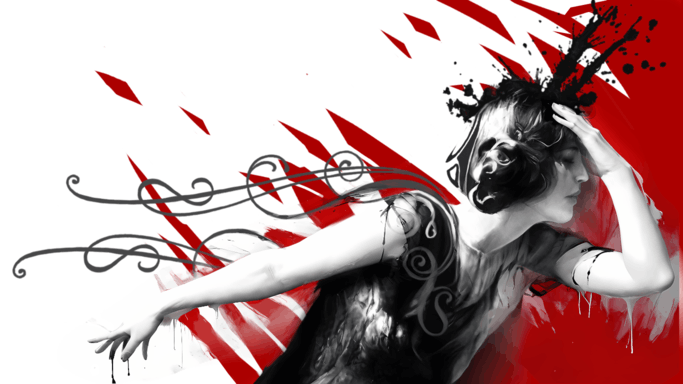
Here's the upcoming release. Inclusion here isn't strictly chronological — Maximilien ships in October — but the game's aesthetic and literary posture sit squarely inside this list's center of gravity. The setting is Boston, 1926. The protagonist is a man whose grip on what is memory, what is hallucination, and what is correspondence with someone who should not be writing back is unraveling.
What earns Maximilien a place in a Lovecraftian retro-style article isn't tentacles or cults. Lovecraft lived in Providence, sixty miles from Boston, throughout the years the game takes place; his Cthulhu story was published in 1928. The game inherits the same New England occult atmosphere — fog, gaslit interiors, letters from people who shouldn't be writing — without leaning on Mythos branding. It's built in Twine/SugarCube (the same interactive-fiction engine that gave us Howling Dogs and a generation of literary IF), hand-written by Yohan Dupuy, translated into English by Lucia Desogus, illustrated by Nicolas "Solynk" Thonney with deliberate period-illustration craftsmanship, and scored by Gaëtan Larant. The shorthand reviewers keep reaching for: Disco Elysium had it been written by Huysmans and set in 1920s Boston. Twelve possible endings, and a playthrough usually takes one to three hours, up to four or five for the longest paths.
Release: October 26, 2026, on Steam and itch.io. Pre-release dispatches are already going out in-character through the project's archive — you can Join the Maximilien Experience to start receiving them now.
If you want context on where the project sits in the broader narrative-horror landscape, our companion piece on the best narrative horror games 2026 places it alongside Slay the Princess, Disco Elysium and 1000xResist.
Perfect for: readers of Huysmans and Algernon Blackwood, IF veterans, anyone drawn to 1920s New England without the racial baggage of the original Mythos.
Lovely Hellplace's 2024 release (published by DreadXP) is the most stylistically inventive open-world RPG of recent years and the most overtly retro-coded entry on this list — its art style is a deliberate, loving recreation of 1996-era PlayStation graphics with the fog distance, draw-in pop, and color banding that an emulator would smooth out. You wake on a floating archipelago of dead gods and inquisitors. You make choices. The world reshapes.
Not strictly Lovecraftian in citation, but cosmically horrific in worldbuilding: the gods are dead, their corpses are the geography, and the surviving cults make a living scraping divine flesh for arcane crafting components. Around fifteen hours, around $20, and one of the strongest writing-driven RPGs of its size in recent years. If Morrowind had been made by a fan of The King in Yellow, this is what it would have looked like.
Perfect for: PS1 nostalgists, Morrowind defenders, anyone who likes their cosmic horror with proper RPG systems underneath.
Ares Dragonis' 2021 solo project — yes, one person — is the most literal Lovecraft adaptation of recent years. You play Andrew, washed ashore on a fog-shrouded island looking for his missing daughter, navigating locations that quote The Call of Cthulhu, The Dunwich Horror, and The Shadow Over Innsmouth directly. The art style isn't pixel-retro but the design language is — fixed camera angles, deliberate framing, the visual grammar of early survival horror.
It's uneven. Combat is rough. Pacing wanders. But as a single-creator devotional adaptation of the original stories, it's a remarkable artifact and worth several hours of any genre fan's time. The atmospherics — particularly the section explicitly recreating R'lyeh — are some of the most direct interpretations of Lovecraft's prose ever rendered playably. Around $20. A 2024 sequel, The Shore: First Story, expanded the format.
Perfect for: die-hard Lovecraft completionists, indie horror archivists, anyone curious what one person with passion can build alone.
Zeboyd Games' 2010 16-bit-style RPG plays the entire Mythos for laughs and is, against all odds, one of the funniest things in the canon. Cthulhu has been stripped of his powers by a sorcerer and must save the world to regain them — because being a hero is the only path back to eldritch godhood. The combat is JRPG by way of Final Fantasy IV. The dialogue is Whedonesque in the period-correct, mid-2000s sense.
You won't find existential dread here. You'll find a love letter to the Mythos, written by people who clearly know the stories well enough to mock them affectionately, in a graphical style that genuinely looks like a 1991 SNES release. Five to eight hours. Available with its companion piece Breath of Death VII in a single inexpensive bundle. The palate cleanser this list needs.
Perfect for: JRPG fans, anyone burned out on dread, players who like their Old Ones with a sense of humor.
Minor Key Games' 2013 first-person roguelike is the genre's most original use of a voxel art style. The aesthetic looks like an unreleased mid-90s shareware title — chunky textures, swirling fog, librarians who turn into things — and the structure is procedurally generated dungeons drawn directly from the Mythos: the Mountains of Madness, the Plateau of Leng, R'lyeh itself. Permadeath, sanity meter, weapons that work most of the time.
Eldritch is short — two to four hours per successful run — but it captures something the bigger Lovecraft games miss: the quiet, library-quiet, voice-in-the-stacks dread of reading too much and noticing too late. The library hub between levels, where you choose your starting equipment from a desk lit by a single green lamp, is one of the most evocative environments in the genre. Roughly $15 with all DLC. An under-discussed classic.
Perfect for: roguelike fans, anyone who loved Spelunky and wanted it haunted, players who appreciate a horror game with genuine architectural imagination.
If pixel cosmic horror has taken you this far, the tabletop adjacent world is where the most uncompromising Lovecraftian writing currently lives — and several major systems now ship with official solo modes. Three to consider:
Call of Cthulhu: Solo Investigator's Handbook (Chaosium, 2024). The world's longest-running horror RPG, in continuous publication since 1981, now has a properly designed solo system written by Chad Bowser and others. It works with the standard 7th-edition rules and Chaosium's vast back catalog of scenarios. You roll, you read, you write. The official call of cthulhu solo investigator handbook is the most literary tabletop horror experience in print — closer to playing a Lovecraft pastiche than to running a dungeon crawl.
Arkham Horror: The Card Game (Fantasy Flight Games, 2016–present). Not technically an RPG, but the closest a card game has come to telling Mythos stories. Plays beautifully as a solo experience (one player controlling two investigators is the recommended configuration) and remains in active publication with regular expansion cycles. Linked campaign scenarios deliver genuine novelistic payoff across a season of play. Currently the most popular solo-friendly entry point into the Arkham Files canon.
Mythos solo journals. A small but excellent corner of indie tabletop — games like The Cult of the Tentacle, Notorious, and Apothecaria use prompts and dice to drive a written, journaling-style horror experience. They share more DNA with interactive fiction than with traditional RPGs, and if Anchorhead hooked you, this is the next step.
For deeper crossover with our digital coverage, our piece on the best psychological horror games 2026 covers the broader genre across both interactive fiction and conventional video games.
Twelve games plus a tabletop coda is a lot. Here's a shorter way through:
For your first lovecraftian retro game ever: World of Horror. Beautiful, short runs, clear systems.
If you're a reader before a player: Anchorhead (free) followed by Stygian: Reign of the Old Ones.
For cosmic horror as management: Darkest Dungeon. The most-played entry on this list for good reason.
If you want weird and short: Eldritch (4 hours) or Lone Survivor (5 hours).
Players craving something funny: Sucker for Love or Cthulhu Saves the World.
For a 2026 release set in the right city at the right time: Maximilien, October 26. Hand-written, literary, period-illustrated. You can read more about the project or sign up for in-character dispatches before launch.
For the tabletop crossover: Call of Cthulhu: Solo Investigator's Handbook.
Coming October 26, 2026 on Steam
Windows · Linux
English · Français


Created by Yohan Dupuy© 2026 — All rights reserved