Murder Mystery Horror Games to Play This Halloween
Murder Mystery Horror Games to Play This Halloween Halloween horror doesn’t always chase you down a corridor. Sometimes it hands...
Read More →
Reading time: 14 minutes
October has a sound to it. The hum of a cheap desk lamp, a floorboard that settles when nobody walked on it, the particular quiet that arrives after midnight. Halloween is the one week of the year built for being deliberately, willingly afraid, and the games below are the ones worth being afraid with this season.
This is not a list of the loudest or the goriest titles. It leans toward indie horror and narrative horror, because those are the games that follow you out of the room. Some you can finish in a single night. One of them, the newest on the list, only arrives at the start of the month. If you want a short answer before the full guide: for pure atmosphere, start with Signalis; for a story that bends around your own choices, Maximilien releases on October 26, 2026, and is built specifically for this kind of October.
What follows is fifteen games, loosely ranked, each with a reason it earns a place in your Halloween rotation, and a note on how long it will actually take you.
Big-budget horror has its place. Resident Evil still sells, and the production values are genuinely impressive. But the scariest thing about a polished AAA monster is rarely the monster itself: it is expensive, and you can feel the budget quietly reassuring you that someone, somewhere, is in control. The seams are sanded down. The lighting is flattering even when it is trying not to be. A multi-million-dollar creature behaves like a multi-million-dollar creature: predictably, on cue, with a health bar.
Indie horror removes that reassurance. With smaller teams and tighter scope, indie developers reach for the cheaper, older, far more effective tools: implication, restraint, sound design, and structure. A pixel sprite that does something it should not is worse than a photorealistic creature doing exactly what creatures do. The low-fidelity image leaves a gap, and your imagination, which knows you personally, and knows exactly what frightens you, rushes in to fill it. That is the whole genre in one sentence, and it explains why so many of the games below cost less than a cinema ticket yet outlast a season of horror films in your memory.
There is a second reason, and it matters more than most lists admit. Indie horror is structurally free. A studio with a hundred staff and a publisher cannot easily ship a game that is two hours long, refuses to explain itself, or tells its story backwards. A two-person team can. Several of the most unsettling games below are unsettling precisely because of a structural decision no risk-averse publisher would have signed off on: a story told out of sequence, a card game that stops being a card game, a house that learns your habits.
The third indie advantage is pace. Halloween is a single night for most people. A two-hour game that genuinely wrecks you is a better Halloween purchase than a forty-hour campaign you will abandon, half-finished, by mid-November. Several picks here were chosen precisely because you can start and finish them between dinner and a nervous, deliberate walk to check the front door is locked.
Good to know: Eight of the fifteen games on this list can be completed in a single evening. Look for the ⏱ One-night pick tag.
A quick word on what "scary" means here, since the term does a lot of unspoken work. Jump scares are cheap and they fade fast: the heart rate drops, the moment passes, nothing is left. The games on this list mostly chase a slower, stickier feeling: dread. Dread is the sense that something is wrong and getting worse, that the floor of the situation is tilting, that you would like to stop now and the game will not let you. It does not spike. It accumulates. And it is the reason a low-poly survival horror game from a tiny studio can still be the thing you think about, uneasily, while brushing your teeth three nights later.
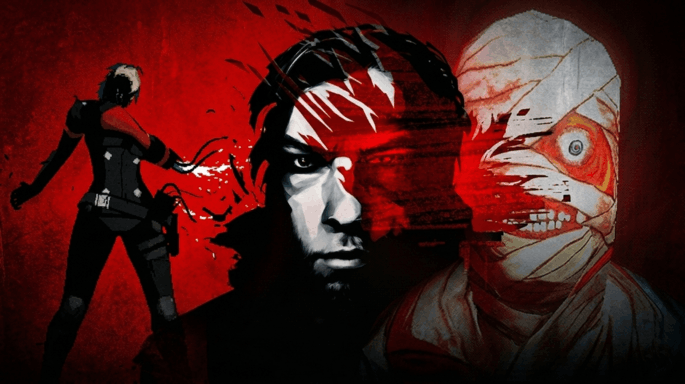
If you only install one game from this list, install this one. Signalis is a survival horror game with the bones of classic Resident Evil and the soul of a half-remembered dream: limited inventory, fixed dread, and a story about love and identity told in fragments you assemble yourself. The retro presentation does not soften it. The cosmic, unknowable ending stays with players for years. Atmosphere this dense rarely comes from a small team, which is exactly why Signalis sits at the top.
Perfect for: players who want the single most complete atmospheric horror experience on the list.
Roughly two hours long, and one of the most discussed indie horror games of the last few years. Mouthwashing puts you aboard the stranded space freighter Tulpar with a crew that is already coming apart. Released on PC in September 2024 and later on consoles, it tells its story out of order, which means the horror is structural: you understand what happened only as the game decides to let you. It is grim, it is upsetting, and it is genuinely brilliant. Not a comfortable pick. The right kind of uncomfortable for late October.
Perfect for: one intense, unforgettable evening that you will need to sit quietly with afterwards.
A retro survival horror set in 1990, in an abandoned theme park outside Atlanta. Crow Country looks like a lost PlayStation 1 disc and plays like a developer who clearly loved Silent Hill. The blocky character models are not a limitation; they are the trick. Your brain fills the low-poly faces with the worst thing it can imagine. An Exploration Mode lets nervous players wander without combat, which makes this a rare horror game you can recommend to almost anyone. A perfect, tidy Halloween evening.
Perfect for: players who want classic survival horror without a forty-hour commitment.
The newest game on this list, and the only one timed to land on the season. Maximilien is a psychological horror narrative game set in Boston, 1926: a city of gas lamps, harbor fog, and a particular kind of literary unease. Think of it this way: a story-driven horror experience where the genuine threat is not a creature in the dark but the reader's own deteriorating composure.
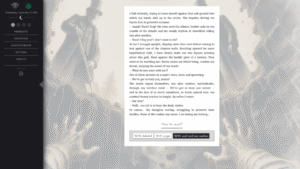
Its centerpiece is a mental-state system. The game quietly tracks your mental state, and as it frays, visual artifacts build up and unsettle the page and the interface (never the words themselves), while your choices steer the story toward one of twelve possible endings. No two readings of Maximilien arrive at the same place. For Halloween 2026 specifically, it offers something the older games on this list cannot: a horror story that is new, unspoiled, and built to be experienced for the first time in exactly the week you would want to.
Perfect for: readers who want a brand-new, literary horror experience nobody can spoil for them.
Good to know: Maximilien releases October 26, 2026. Wishlist it on Steam or discover Maximilien.
Three chapters of demonic horror rendered in deliberate, almost Atari-era pixel art. Faith should not be frightening. It is. A young priest, an exorcism that went catastrophically wrong, and an animation style so minimal that the rotoscoped death scenes feel less like a game and more like cursed found footage someone left on your doorstep. The trick is the contrast: the visuals give you almost nothing, the audio gives you everything, and the space between the two is where the fear lives. Each chapter is short. Played back to back in a dark room, the trilogy is one of the most efficient, concentrated scares the genre has produced: proof that fidelity and fear are not the same thing.
Perfect for: players who think old pixel art could never frighten them.
Part deck-building card game, part escape room, part something the game would very much prefer you did not discuss. Inscryption begins as a sinister card battler in a cabin lit by a single lamp, with an opponent who watches you a little too closely, and then it refuses, repeatedly, to stay the thing it appeared to be. To say more would spoil it, and spoiling Inscryption should arguably be a criminal offence. What earns its place on a Halloween list is not gore but unease of form: the horror of a game that keeps changing the rules of what it even is, until you are no longer sure what you agreed to play. It is the most clever entry here, and cleverness, in October, is its own particular kind of dread.
Perfect for: players who want to be unsettled by structure rather than by gore.
Russian roulette, but with a pump-action shotgun, played against a dealer who is not human and not friendly. Buckshot Roulette is tiny, tense, and brutal: a single grimy, strobe-lit room and a game of nerve that lasts about an hour. The premise is almost insultingly simple, and that simplicity is the weapon: there is nowhere to hide, no inventory to fuss over, just the gun, the dealer, and the math of your own survival. It became a streaming phenomenon for a reason. As a quick, sweaty-palmed Halloween appetizer to set the tone before a longer game, nothing else on this list matches it for raw dread-per-minute.
Perfect for: a short, sharp jolt of tension before the main event.
One-bit horror inspired openly by the manga of Junji Ito and the cosmic dread of H.P. Lovecraft, drawn entirely in stark, scratchy black and white. World of Horror is a roguelite set in a cursed Japanese seaside town where the apocalypse is not a threat but a process already underway: you are simply choosing, run by run, the manner in which you will lose. Every playthrough assembles a different short story from a deck of mysteries, curses, and quietly horrible townsfolk. The art alone earns its October place: sharp, smudged, deeply and deliberately wrong, like a photocopy of something that should never have been printed once.
Perfect for: fans of cosmic horror who want endless, replayable short stories.
A short, nearly free experimental horror game about a house. That is the entire premise, and stating it plainly is the only honest way to describe it. You explore a dark, ordinary home, collecting cassette tapes, playing them, and listening, and the house, slowly, across the length of the game, becomes aware that you are inside it. Anatomy is barely a "game" in the conventional sense; it has no combat, no failure state, nothing to master. It is closer to a haunted essay. It is also one of the most quietly disturbing things you can install on a computer. A single evening, headphones mandatory, alone strongly recommended and deeply regretted.
Perfect for: players who want dread without a single jump scare.
A free, fan-made survival horror game that began life as a Half-Life mod and then comprehensively outgrew the thing it was built on. Cry of Fear is a long, ambitious, genuinely mean descent through a nightmarish nighttime city, heavy with psychological subtext about depression, isolation, and the stories we tell ourselves to keep going. The encounter design does not flatter you; ammunition is scarce, the dark is total, and the game is happy to let you fail. It is rough around the edges in the way only a passion project can be, and it does not care in the slightest. For players who want a meatier, multi-night Halloween project at a price of exactly zero, it remains a cult landmark worth the download.
Perfect for: players who want a longer, free horror project across several nights.
The most action-forward pick on the list, and the only one built for company. The Outlast Trials takes the found-footage terror of the Outlast series, relocates it to a paranoid Cold-War-era research setting, and adds drop-in co-op, so you and up to three friends can be hunted through the same nightmare together. The fear changes character when it is shared: less lonely, more frantic, full of bad decisions made at volume. It is loud, exhausting, and genuinely funny in the way only collective panic can be. If your Halloween involves a group on a voice call rather than a solitary candlelit vigil, this is the one to load up first.
Perfect for: a group Halloween night with friends online.
A horror-tinged visual novel about, precisely and only, what the title promises, and revealing much more than that would do it a disservice. You are sent down a path, into the woods, to a cabin, to slay a princess. The princess, reasonably enough, has strong opinions about this plan. Fully voice-acted, hand-drawn, and built on a branching structure that delights in subverting its own premise the instant you think you understand it, Slay the Princess unsettles through dread, doubt, and dramatic irony rather than gore. For a story-led Halloween, the kind spent reading rather than reacting, it is excellent, uneasy company.
Perfect for: players who want a branching, voice-acted horror story.
An episodic narrative horror game set in a slowly decaying Appalachian mining town, where the character traits you pick at the start genuinely reshape what you are able to do, notice, and survive. Scarlet Hollow is hand-drawn, dense with memorable characters, and patient with its scares: a slow burn that trusts you to sit with discomfort rather than flinch from it. Its branching design openly rewards a second playthrough, since a single run can only ever show you a fraction of the town's secrets. A strong pick for players who want their horror conversational, character-driven, and atmospheric rather than reflex-driven.
Perfect for: players who want character-driven horror with real replay value.
A horror anthology told in short, first-person episodes, each presented as a recreation of a "real" experience submitted by a player: a late shift at an empty store, a road trip gone quiet, a houseguest who is not quite behaving like a houseguest should. Fears to Fathom runs each episode under an hour and pointedly trades monsters for the specific, recognisable horror of an ordinary situation tilting wrong. There is no fantasy here to hide behind. That is the point, and it is quietly one of the most effective Halloween series of recent years: best played one episode a night, lights low.
Perfect for: players who find ordinary, plausible situations scarier than monsters.
The gentlest entry on the list, and not horror in the strict, genre-purist sense, but a historical murder mystery set across decades in 16th-century Bavaria, rendered entirely in the style of a hand-painted illuminated manuscript, carries a creeping unease all its own. Pentiment is a game about death, blame, faith, and the long shadow a single accusation can cast over a community. It earns its closing spot through atmosphere and melancholy rather than fright: a beautiful, sombre way to come down from the more aggressive picks above while staying firmly inside the October mood. Think of it as the slow walk home after the scare, not the scare itself.
Perfect for: players who want a beautiful, melancholy wind-down rather than a scare.
If you have one night and want to be genuinely scared: Mouthwashing, Faith, or Anatomy. All short, all merciless.
If you want atmosphere over adrenaline: Signalis, Crow Country, or Pentiment. Slower, denser, more beautiful.
If you are playing with friends: The Outlast Trials. The only group pick, and it is built for it.
If you want something brand new and unspoiled: Maximilien, releasing October 26, 2026. The whole point of a new release is that nobody can spoil it for you, and a story driven by the narrator's fraying mind is best met without a walkthrough open in another tab.
What this list is not: It is not a ranking of the most technically advanced horror games, and it is light on traditional AAA survival horror. If you came looking for the next photorealistic blockbuster, this is the wrong guide. These are games chosen for the feeling they leave behind, not the budget they spent.
Most "best of" horror lists are archaeology: they point you at the past. That is useful, but it has a flaw at Halloween: the genuinely great older games have already been streamed, spoiled, and meme-d. The first-time experience, the one Halloween is actually about, is gone.
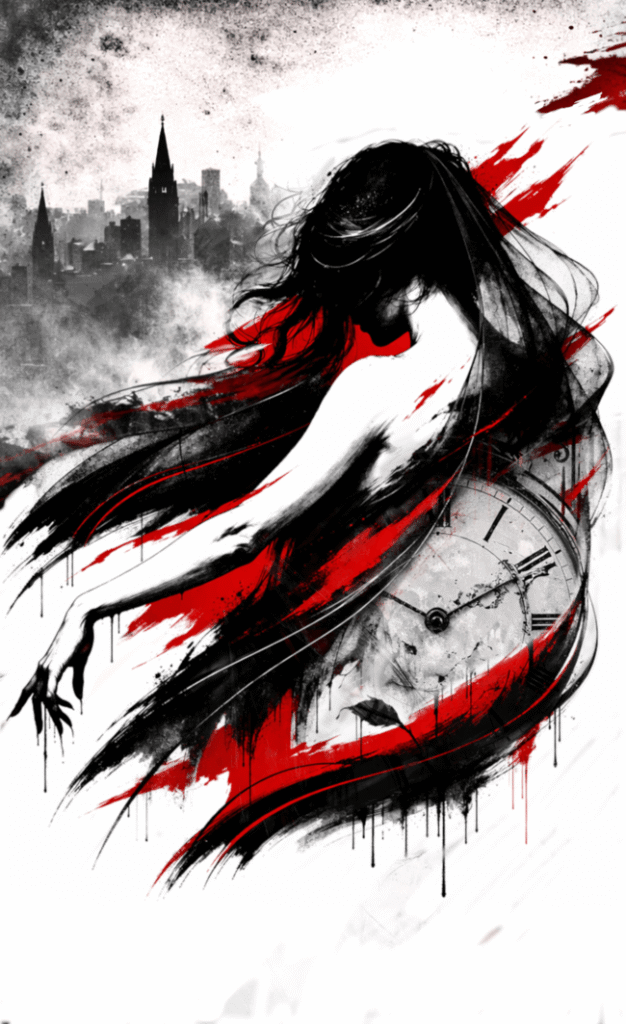
That is the gap Maximilien is built to fill for 2026. If Disco Elysium had been set in 1920s Boston and written with the decadent, claustrophobic sensibility of a turn-of-the-century gothic novel, it would look something like this. The 1926 setting is not decoration; the period, its medicine, its spiritualism, its anxieties, is the engine the horror runs on. And the mental-state system means the story is not something you watch happen. It is something that happens to your composure, and changes shape depending on how well that composure holds.
There is no single answer, because Halloween horror splits into moods. For atmospheric dread, Signalis and Crow Country lead. For short, intense sessions, Buckshot Roulette and Mouthwashing deliver in under three hours. For a story-first experience built around a sanity mechanic, Maximilien releases on October 26, 2026.
Often, yes. Indie horror trades expensive realism for psychological pressure, restraint, and unusual structure. Titles like Faith, Mouthwashing, and Anatomy unsettle players through implication and silence rather than spectacle, which tends to linger longer than a jump scare.
Mouthwashing runs about two hours. Buckshot Roulette and Faith Chapter 1 each take roughly an hour. Anatomy is a single haunted evening. All four fit comfortably into one Halloween sitting.
Yes. Maximilien is a psychological horror narrative game set in Boston in 1926. It tracks the reader's mental state through a mental-state system in which visual artifacts build up across the page and the interface (never the words themselves), and your choices lead to one of twelve possible endings. It releases on Steam on October 26, 2026.
This guide is part of a wider series. For year-round picks, see our companion articles on the best psychological horror games and narrative horror games worth playing.
Halloween rewards preparation. Pick one short game for the night itself, one slow game for the week building toward it, and, if you want the one experience nobody can spoil, keep October 26 free for a new release built for exactly this season. The lamp will hum either way. The floorboard will settle. The only real question is which of these fifteen games you want in the room when it does.
Whatever you choose, play it in the dark. That part is not optional.
Coming October 26, 2026 on Steam
Windows · Linux
English · Français


Created by Yohan Dupuy© 2026. All rights reserved
Postal Telegraph · Boston Mass.
Development notes, latest news, exclusive updates.
Nothing else done with your address.
By subscribing you agree to receive news about Maximilien. See the privacy policy.